Urban transportation has always been about movement, but what is changing now is not just how fast people and goods move. It is how everything connects. Over the past two decades working across infrastructure, logistics, and technology-driven businesses, I have seen a clear shift. We are no longer building isolated systems for shipping, delivery, or passenger transport. We are building interconnected ecosystems where all forms of mobility begin to overlap.
This shift is not theoretical. It is happening right now in real cities, with real users, and real operational pressure. Companies that understand this early will shape the next generation of transportation.
The Convergence of Logistics and Mobility
Traditionally, logistics and passenger transport were treated as separate industries. One focused on goods, the other focused on people. They had different technologies, different operational models, and different priorities.
That separation no longer reflects reality.
In practice, the same infrastructure often supports both. The same roads, the same routing systems, the same data streams, and increasingly the same platforms. What we are seeing now is a convergence where logistics intelligence directly informs mobility systems.
When I built and scaled logistics operations, one of the most valuable insights was that movement is movement. Whether it is a package or a person, the core challenge is optimizing time, distance, and reliability. Once you understand that, you start to design systems differently.
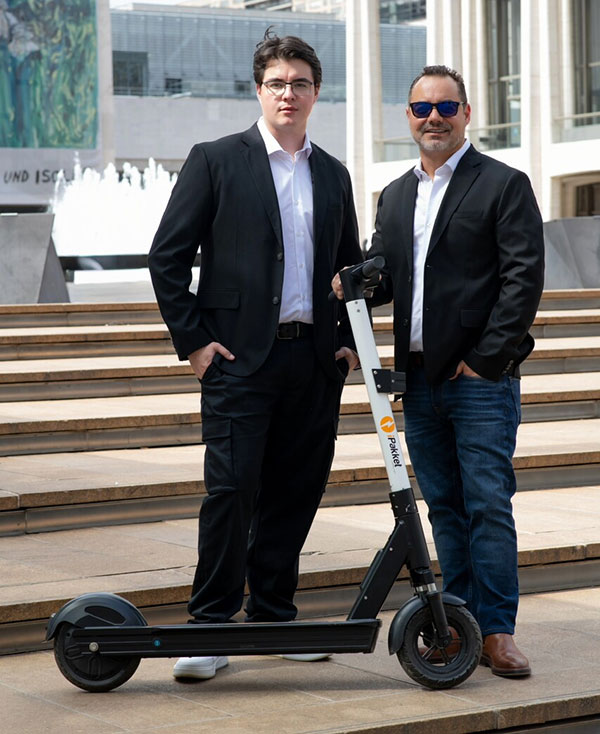
Platforms like Ipakket and Ride by Ipakket reflect this direction. They are not just services. They are infrastructure layers that attempt to unify different types of movement into one coordinated system.
Why Fragmented Systems Are Breaking Down
Urban transportation has become too fragmented. In most cities, there are multiple apps, multiple fleets, multiple service providers, and no unified logic connecting them.
This fragmentation creates inefficiency at every level. Vehicles sit idle while demand exists elsewhere. Routes overlap unnecessarily. Users switch between platforms trying to find reliability. Operators struggle to maintain consistent utilization.
From a systems perspective, fragmentation is waste. It increases cost, reduces efficiency, and limits scalability.
In logistics, we solved similar problems by centralizing routing intelligence and improving data visibility. The same principle now applies to mobility. Without integration, urban transportation will continue to operate below its potential.
The Role of Data in Integrated Mobility
The real foundation of modern mobility ecosystems is not vehicles or drivers. It is data.
Every trip, every route, and every delay generates information. When that information is captured and structured properly, it becomes the basis for smarter decisions across the entire system.
Integrated platforms allow data to flow between logistics and mobility layers. That means a delivery route can inform ride availability. Ride demand can influence fleet positioning. Traffic patterns can adjust routing in real time.
In my experience, the biggest operational gains always come from visibility. When you can see the full system clearly, you can optimize it intelligently. When you cannot, you are always reacting instead of planning.
From Service Providers to Ecosystem Builders
One of the biggest mindset shifts in this industry is moving from being a service provider to being an ecosystem builder.
A service provider focuses on completing a single function. A ride. A delivery. A transaction.
An ecosystem builder focuses on how all functions interact. How rides influence logistics. How logistics influence fleet usage. How pricing, demand, and availability adjust dynamically across the network.
This is where the future of companies like Ride by Ipakket sits. Not as isolated mobility apps, but as part of a larger operational ecosystem that connects different forms of transportation into a unified system.
Operational Intelligence Over Scale Alone
For many years, success in transportation was measured by scale. More vehicles, more cities, more users. Scale is still important, but it is no longer enough on its own.
What matters more now is operational intelligence. How well a system adapts. How efficiently it uses its resources. How quickly it responds to changes in demand.
A smaller but highly intelligent system can outperform a larger but fragmented one. I have seen this across both logistics and infrastructure projects. The systems that win are the ones that learn quickly and adjust continuously.
This is why integration matters. When systems are connected, intelligence compounds. When they are separate, it is diluted.
The Human Layer Still Matters
Even as we talk about platforms, data, and systems, it is important to remember that mobility is still fundamentally human.
People are not just data points. They are parents going to work, students going to school, businesses trying to meet deadlines. Any system we build must respect that reality.
Technology should reduce friction, not create it. Integration should simplify decisions, not overwhelm users. Efficiency should improve daily life, not complicate it.
In logistics, the best systems are the ones that quietly work in the background while people focus on their lives. Mobility should follow the same principle.
Building the Next Generation of Urban Transportation
The future of urban transportation will not be defined by one company or one model. It will be defined by how well systems connect with each other.
We are moving toward a world where logistics, mobility, and financial systems begin to operate within shared frameworks. Vehicles will not just serve one purpose. Platforms will not just serve one function. Data will not remain isolated within single industries.
This is the direction I focus on in my work. Building systems that are not limited by category, but instead designed for integration from the start.
Conclusion: Toward Connected Movement
The shift from logistics to mobility ecosystems is not just a business evolution. It is a structural change in how cities function.
When movement systems are connected, cities become more efficient. When they are fragmented, cities become slower and more expensive to operate in.
The opportunity ahead is to build systems that treat movement as a unified network. Not separate industries competing with each other, but interconnected layers working together.
That is how urban transportation will be rewritten. Not by adding more of the same, but by connecting what already exists into something smarter, more efficient, and more human centered.